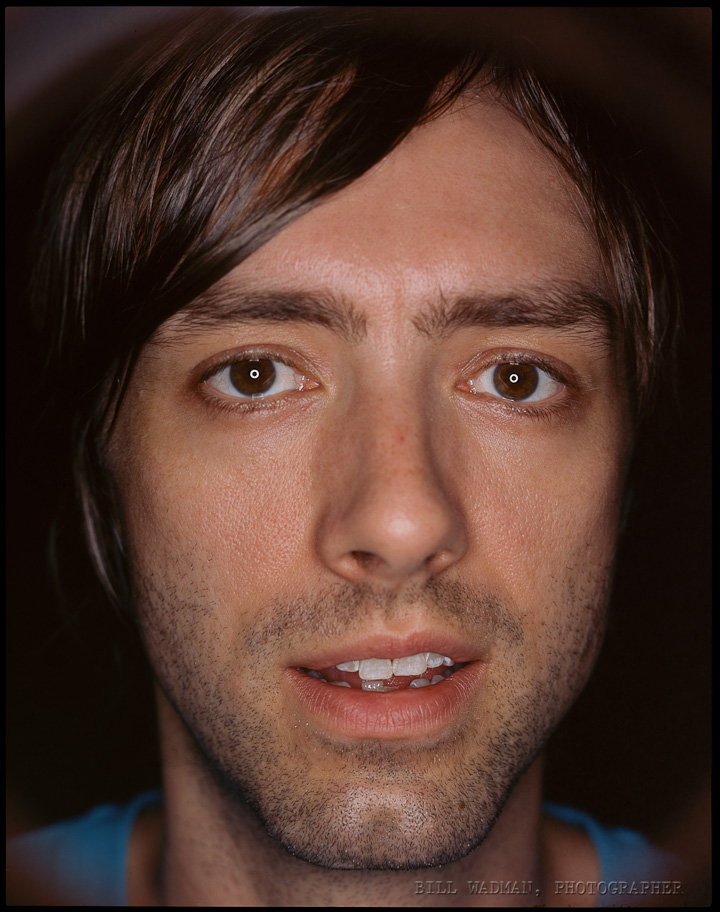
Bianca – Fuji Instant #2

Why Film is Not like Vinyl Records – aka Say Goodbye to Kodak

Well now it’s actually happened. Kodak filed for bankruptcy protection this morning. The once juggernaut of the industry is now a very sick old man trying to sell it’s crown jewel patents to make some cash to stay alive just a little bit longer. It’s quite sad really, for Kodak the company, what’s left of its employees, and photographers everywhere. No word yet on if and how this will effect film production, but let’s all be honest here, film is going away and is not going to make an economical resurgence.
People point to the strength of the vinyl record business as proof that a niche product can re-emerge and thrive, but it’s a false comparison. I know a little bit about the record business actually as my father’s owned record stores and I myself have a degree in music and its production from Berklee College in Boston. Yes, there are more records sold now than at any time in the last decade. However it’s still only few percentage points of total music sold and there is evidence that the trend line has flattened out. This means basically that most of the people who are interested in buying a record player and phono preamp and records have already done so. Don’t get me wrong, I think this is super if that’s what you’re into (personally I’d prefer everything on SACD if I could get it, but that’s another story) And it’s also great for the small short run record plants around the country that were shuttered up in the 90′s. Those pressing machines are very mechanical and virtually indestructible, basically just a hydraulic piston, so I’m not surprised that a little oil and elbow grease brings them back to profitable life. Plus the vinyl blanks (basically just a 1″ think slab of vinyl about 6″ in diameter) are about as simple as can be.
The same is not true of film which is a very complex manufacturing process. It’s chemical, it relies by definition on very strict environmental and procedural controls. Even at its best it can vary greatly from batch to batch of the same stock. All of this means that it’s very much a product which thrives on volume production. The more you make, the cheaper you make it and thus the cheaper you can sell it. The prices of all films that I use have gone up a fair amount over the past few years. And that’s just the films I can still get unlike the Polaroid 55 and Scala which I can’t. When I started out in this field about 10 years ago the film counter at B&H here in NYC was 40 feet long, now it’s barely 10. Likewise there were at least 4 rows of darkroom equipment, now it’s less than 1 all the way in the back right next to the bathrooms.
And there is one of the big problems. Film is a two step process. There’s buying the film and then there’s getting it processed. There are still a few pro labs in the city but the prices have gone up and the lead times have grown. Used to be that you could get a roll of E6 medium format slides back in a couple hours, now to do it same day is an extra rush fee. Luckily I’ve still got a place in my neighborhood that will run my C-41 roll through the machine in 10 minutes for $4. But it used to be $2 only back in 2007 and Connie is giving me a deal because she likes me. Her costs for chemicals have doubled. CVS still has a photo lab, but the quality is crappy and I doubt it will be there in a year anyway. And I live in New York City!, can you imagine what it must be like to get film processed in East Haverton, LA?
How many photographers that want to shoot film are prepared to do all their own processing? Let’s be honest, most of these chemicals are pretty noxious. Kodachrome was a 6 step process from what I recall and the constituent chemicals were so nasty, complex, and expensive that Kodak just stopped making them a couple years ago. Mass outrage on the web and in media, but I didn’t see any other company come in and offer to buy the patents to make Kodachrome. It’s just not profitable, and that’s what it all comes down to. Don’t get me wrong, I like film too. I love the look of old 50′s Kodachrome especially when it’s by Saul Leiter. But I’m just being rational. I’m sure there will remain a few boutique companies who make batches of film and chemicals for the die-hards. Places like Photographers’ Formulary, but it’s going to be very very niche.
Also, I think that people’s love of records has as much to do with a reaction to the fast paced “everything at your fingertips” nature of the modern world as it does the sound. People like the idea of slowing life down. Listening to one album at a time, having to flip the record after 20 minutes, just like their parents did when they were kids. The same is true in the wizbang automatic world of modern cameras to be sure, but I don’t think all the way back to film is what people are looking for. I think they’re the market who is so interested in the recent crop of cameras with physical manual controls and retro styling. All the convenience of digital with the styling of your grandfather’s Leica. Which I’m all for by the way. That new Fuji X Pro 1 while having a terrible name is a pretty sexy piece of kit. Expensive for what you’re getting at around $2400 for a body and lens, but very attractive. If I had it to do I’d still go for an M9 though. If only it was half the price and still used a thumb lever to cock the shutter. Oh well <sigh>
And finally, film was designed for printing, something that not too many people do very often anymore (Though I think they should). Scanning film yourself is a massively time consuming and frustrating affair, not to mention the post scan dust cleaning and color correction. Sending them out is easier, but still takes a while and is expensive if you want it done right.
I’m not a big fan of making my digital pictures look like they were taken on film however. Leave sloppy edges for when you actually shoot film. And don’t get me started on the Hipstamatic revolution. Ya, let’s take my nice 5MP nearly perfect reproduction of the scene and make it into a 600px grainy, out-of-focus, color shifted mess. Silly if you ask me. That said, I do add a bit of grain to low ISO photographs from my 5D2. It’s like the whole thing is a little too perfect. Requires a little dither to look organic and ‘right’. So go out and shoot some film while you still can, because someday soon it’s not going to be an viable option.
Thoughts On The End of Kodachrome et al.
Dwayne’s Photo in Kansas is processing the last rolls of Kodachrome as I write this (nice article on NYT), so I thought it fitting to give my thoughts on the matter. I’ll start by admitting something to you all and that’s that I’ve never shot a single frame of Kodachrome. By the time I started into photography past Tri-X it was already largely too late. I started shooting mostly digital as it was cheaper in the long run and you could see what you were doing instantly as you worked. That said I’ll admit that it’s passing does upset me. Images shot on Kodachrome just look different. Paul Simon was right.
There are those who are quick to point the finger at Kodak, but I certainly don’t. Just the same as Polaroid before them, it was the lack of users that caused the death of these products. They’re trying to run a business and it doesn’t add up on the ledger sheet I don’t expect them to lose money just to keep us photographers happy.
It is however one more nail in the proverbial coffin. I have a friend who just started taking pictures a couple years ago. She was shooting only film, didn’t want to move to digital, even worked at one of the remaining major labs which many of the big-dog film shooters still go to do get their processing done. She and other people like her act as if film really isn’t going anywhere, but they’re delusional. I’ve only been in the business for 4 years or so and I can tell you that there has been a huge shift even since then.
Back in late 2006 I was in London and brought some film I had shot to get processed. Among the standard b/w and c-41 color was a roll of Scala, which was a black and white slide film made by Agfa. The guy at the lab told me they didn’t process Scala but that there was a lab down the street that did, but I better hurry since they were the last such lab in Europe and they were running their last batch ever through the machine the next day. I still remember how I felt that day, probably much like the people standing in line at the counter at Dwayne’s Photo do today. I love Scala. There is something about how it renders grays that I haven’t been able to replicate. It was like I was loosing a friend. One which in my case was a friend I had just made.
Scala wouldn’t be the last for me. I had been shooting a series of studio portraits on Polaroid 55 positive/negative film in my 4×5” for a year when I received the next box in the mail with the dreaded “This product is being discontinued” sticker on it. I’ve still got a half box of maybe 8 frames of expired film in the closet that I’m miserly using. The problem, of course, is that the candles burning at both ends. I don’t want to use it too quick, but it’s also deteriorating as we speak so I need to use it before it really goes to hell. I’ve got a couple rolls of Scala in the fridge as well. There’s still a lab in the US that processes it, at something like $25 a roll. I should just bite the bullet and shoot them.
Another example is QuickLoad film for the 4×5. In the old days you had to manually load and unload reusable film holders in completely blacked out rooms. I myself am a little too lazy for that, so I was using Fuji QuickLoad film which is basically a single slice of film with an integrated cardboard sleeve which acted as a dark slide when used with the correct film holder. Kodak make a similar system called ReadyLoad. I liked the Fuji because you could just use the old Polaroid 545 film holder instead. Now both Kodak and Fuji have discontinued their products.
Between that and the death of 55 my 4×5 becomes much less useful to me and as much as I enjoyed it, it’ll probably sit in it’s box more often than not, which is very sad to me.
Some people are even delusional enough to think they’re going to bring this stuff back. They point to The Impossible Project which has started making Polaroid again, but as far as I’ve seen they’re all about the 600 series film for the little cameras that hipsters use at parties to be retro. I’ve had a few friends who have shot a roll or two of this stuff with mediocre results. I know there is a page on their site about restarting the 8×10 sheets too, but for me it was about the oddball positive/negative films and I’m not about to hold my breathe. As for Kodachrome, it wasn’t just that people weren’t using it, but also that it was a really complicated chemistry and from what I’ve heard, quite nasty to the environment too.
I may sound like a Debbie Downer, but these are just the facts. Lots of stuff that you’ve loved in analog photography is going away. Yes, I concede that there will probably always be boutique b/w films for people who want to process their own, but I don’t think it’ll be anything but a niche. Certainly not like the resurgence of LP records. Do I like it? No. Is it sad? Yes. But honestly, isn’t it inevitable? The one good thing in all of this is that digital photography keeps getting better. It keeps getting better at an alarming rate and it’s already pretty damn good. If you’re a photographer who only shoots film, and you tried a digital camera 3-4 years ago and came away unimpressed with the image quality, go try one again.
In the meantime, I’m going to go pull those rolls of Scala out of my fridge and load my Hasselblad.
Puerto Rico Scans


Film or Digital? Is this really still a question?
I could have sworn that I’d written a blog post about this topic, but I did a scan through my archives and came up empty, so here I go. A few weeks ago while I was shooting futurist Ray Kurzweil, he asked me the question that most non-photographers end up asking me. “Is that film or digital”. And it surprises me that this is still in active rotation. Maybe they ask it because it’s topical and they don’t know what else to say, or maybe they figure that even though amateur photography is about 98% digital at this point, maybe pros still shoot film.
The answer is that yes, some of them do. But it’s a minority by now and the population is shrinking. Whenever I meet a young photographer who’s dead-set on shooting only film, I just shake my head. Maybe if you’re independently wealthy or are doing amazingly original art photography you could pull it off. Honestly though, unless you’re shooting only b/w tri-x, I wouldn’t trust that I’d be able to even buy my favorite film in 5 years. In the short time that I’ve been shooting, I’ve said goodbye to a number of films that I loved to shoot. I still weep for Scala. The film counter at B&H is a third the size is was only couple years ago. And chemistry and darkroom gear which used to take up 4 rows of shelves is now relegated to the back wall next to the bathrooms.
Let me take a moment to say that I’m no hater of film. I’ve got a Leica M4, and a Hasselblad and a big Cambo 4×5 that I occasionally take out for a spin. In fact on my recent trip to Japan, I took only the Hasselblad and twenty-something rolls of film. I love the way that great pictures from film look. It can be special, but that doesn’t mean it always is. It also doesn’t mean that digital images can’t be special too. They’re just different. It used to be that digital images lacked depth, resolution, and refinement. Here’s the thing though, digital keeps getting better while film stays the same. And better it’s gotten by leaps and bounds. My first digital camera, less than 10 years ago, was a 2MP little digicam whose images don’t even fill half of my current screen. Now I’ve got a 21MP body whose images easily rival my medium format setup in overall quality. Does b/w film have a lot more dynamic range that digital? Yes and by a few stops. But honestly, that’s the only truly objective measure where film is still killing digital. And also the next place that digital will probably try to improve.
In my humble opinion as a working photographer, the two are at least at parity. They each have strengths and weaknesses, but images of approximately the same quality. Much like analog and digital audio recording. Digital has gotten to the point where it’s advantages trump analog with all but the most ardent die-hards. And don’t forget the photoshop plug-ins that add grain or otherwise try to mimic the look of different film formulations. I use fake grain occasionally, and it looks pretty good. Another thing that gets me mad is film snobbery. Competitions which take only film-based entries for example, have no place. What does it matter how the image was made. Isn’t it the final image that matters?
Some digital haters like to point to the supposed over-use of digital manipulation, as something akin to a ‘purity of the game’ argument. Well you don’t have to look hard to see the weaknesses of that. Manipulation of images has been around since the medium was invented. Different development recipes, basic dodging and burning during printing, and don’t forget the heavy retouching of old negatives with what is essentially redrawing with a pencil. Why do you think master print makers exist? At the recent Avedon exhibit at ICP there is a whole room full of working prints with his comments and direction. As well as a number of collages that I had looked at large prints of only 10 minutes earlier and had no idea they weren’t a single shot. Hell, even Dorthea Lange’s famous migrant mother photo is manipulated.
As someone who shoots mostly digital and does a fair amount of manipulation to my images, I find the new technology to be liberating. I could not make my portraits on film and have them look the way they do. To me it’s the final image that matters, not necessarily the steps you went through to get it. Film is a pain in many ways. You’re stuck with film speed and type for a whole roll, you’ve got to get it processed, most of the time you’ve got to scan it. Plus it’s expensive. My Japan pictures cost me about $400 in film and processing, plus 2 days of my time in scanning, color correcting, and retouching.
Maybe for some people that’s a good thing. Some sort of perverse puritanical statement about pulling yourself up from your bootstraps. ‘It’s supposed to be hard! Otherwise everybody would be doing it’. You know what? Everybody is. Everybody has got a camera nowadays and they’re posting their images to flickr. The thing is that you can still tell the good images from the bad. Yes digital makes it easier for everybody, but it doesn’t make everyone good. Tools are tools, nothing more. Are things that are time-consuming automatically better? Anyone who believes that can go clean their bathroom with a toothbrush. Seriously though, if that were the case, then why are all these film people using plastic roll film instead of pouring their own Collodion plates and developing them over vapor before making albumen prints (which I would love to try at some point btw)? Technology moves on, things change.
While it may sound like I’m mostly knocking film, it’s not for political reasons, purely practical ones. I and I think most other photographers, would have a hard time making a living shooting film. People expect their photographs in a few hours, not a few days. But mostly what I’m trying to say here is that there is room for both under the photographic tent. So if you like film or digital or both, it really doesn’t matter. They’re just tools for making pretty things to look at, not religions in and of themselves regardless of what anybody says. So worry about the images, and certainly don’t judge them based on what was used to make them.
Japan book.
If anyone is interested, I’ve published a book of 36 of my images from Japan.
It’s available 12×12″ Hardcover for $85.
http://www.blurb.com/bookstore/detail/761253
Japan Scans – set #3
One last small set of scans from Japan.
http://www.flickr.com/photos/billwadman//sets/72157616809298067
I’ve got one more roll to get developed next week, but I’m done with everything I’ve got right now.
Now I’ve got to cull the 122 that I scanned down to 25 or so for a show at the Red Horse Cafe in June. <sigh>
Japan Scans – set #2
Here’s set 2 of my photos from Japan.
http://www.flickr.com/photos/billwadman/sets/72157616477543783/
Japan scans – thumbnail
![]()
I’m still working on scanning all of the film from my trip. It’s massively time consuming.
But in the meantime, I thought it would be interesting to make a little collage of all of the thumbnails. So here’s 2 weeks of photos in 710 pixels. Click here for a bigger one.
Japan Scans – set #1
Ok, here’s my first set of 50 images from my recent trip to Japan. Due to the number I’ve decided to host them on my flickr account that I never really use. So feel free to comment here or there.
http://www.flickr.com/photos/billwadman/sets/72157616408174078/
Scanning film is a giant pain in the ass and very time consuming. I spent all day yesterday and got through 9 of 24 rolls of film, so there is a lot still to process. More to come in the coming days.
They are in no chronological order, just the first 9 rolls I put in sheets, and really more about fun and interesting things I saw than the normal portraits I do.
Let me know what you think.